Room Six
The agency sent me to Wenfield civic annexe on a six-week placement, minutes clerk to the administrative hearings. Dog noise. Boundary walls. A stairlift refused on appeal, twice. Small grievances, heard by a panel chair sitting in an independent capacity, with me below the top table, a pad, and Derek’s fountain pen, taking down every word because the council had decided, at some point nobody could now name, that its hearings would not be recorded.
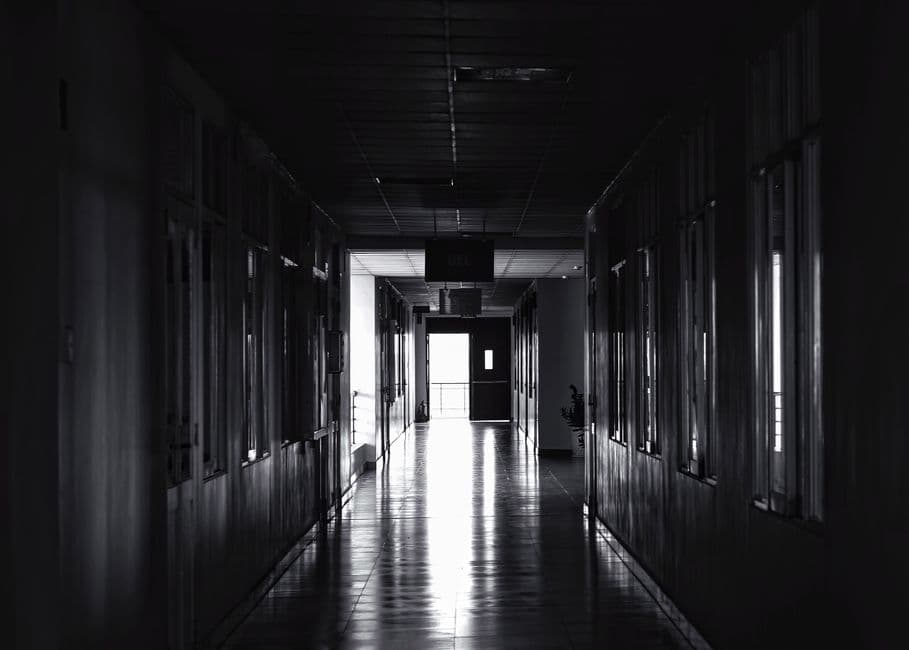
Six hearing rooms ran off the ground-floor corridor. One through five were ordinary — knocking radiators, a curling poster about council tax, chairs that swivelled when you leaned back. Room Six sat at the end, past the records hatch, its window onto the corridor frosted over. Beside the door, laminated:
RECORDING DEVICES PROHIBITED.
THE MINUTES ARE THE OFFICIAL RECORD OF THIS HEARING.
Derek showed me the hatch, the tea rota, which of the panel chairs dozed through the afternoon sessions. He retired in my second week. At the bus stop opposite he turned and waved with both hands, the way a man waves from a departing ship.
Cases reached Room Six by a rule I never found written down: whatever the ordinary rooms couldn’t settle went there for a final listing. The list came up from records each morning, and the sixes never came back.
Mrs. Renshaw
Mrs. Renshaw’s boundary dispute had been through Room Three twice — nine inches of garden, a neighbour’s extension, a surveyor’s report she carried in a bag from the Co-op. Her hearing in Room Six lasted forty minutes. She spoke well, dates and measurements and a hedge that had died of it, and the chair thanked her, and I took every word, and at the end she signed the minute sheet to say it was a true record, which is the custom, and went home.
Next morning she was at my counter before we opened, coat still buttoned, asking whether her case had been heard, because her garden was nine inches shorter and she couldn’t think why. I fetched the sheet and read her own testimony back to her. She listened the way you listen to a story about a stranger — sorry for the woman in it, tapping the counter at the unfairness — and when I finished she said what a relief that the matter was resolved, and signed again, and left calm. I put it down to her age. Hearings take it out of you at seventy.
By week four my daybook held sessions I couldn’t place. The book lives in my inside pocket. The entries were mine, dated, timed, initialled in the margin the way I initial them. Wednesday 10:40, Room Six, compulsory purchase, 55 minutes. Thursday 2:15, Room Six, hackney licence. I remembered neither. I remembered the mornings around them — the tea, the bicycle, a wasp in Room Four — and in between, hours with entries but no floor under them. The fountain pen ran dry overnight twice that week, though I capped it. I bought cartridges with my own money.
Then the note. Halfway down a Thursday page, under the 2:15, pressed hard enough to emboss the next sheet:
Don’t read the resolved files. Don’t file anything of your own. Six weeks, then out.
No memory of writing it. The ink was mine — these cartridges stain a particular blue-black that washes off skin but never off paper.
Matters Resolved
I went into the archive on the Friday with a returns trolley for cover. The shelving runs on one system since 1963, grey annual boxes, numbered, and beside them a card index with a drawer that hasn’t closed in years: MATTERS RESOLVED. Every card in it closed. Not one reopened, not one appealed, in fifty-six years. Laminated above the enquiry desk: RESOLUTION RATE 100% — and beneath it, smaller, SINCE RECORDS BEGAN.
Derek’s form was in the 2011 box. Grievance, conduct of hearings, Room Six. Nature of complaint, in a fair round hand I knew from the tea rota:
That matters spoken in Room Six are not retained by the persons who speak them; that this has happened to the complainant; that it is continuing to happen.
Matter dealt with. Complainant satisfied. A minute sheet was stapled to it in the same hand, forty minutes of it, and every word of it was about the room.
Derek waves from the bus stop with nothing behind it. I stood at the shelf with his file open and understood what I was holding, and then — this took longest of all — understood that the understanding wasn’t going to keep.
The next six on the list was Mr. Saddiq, a taxi proprietor fighting a revocation. Before he went in I told him at the counter, low, to ask for a different room. He nodded like a man humouring staff. Forty minutes later he came out thanking the panel, wrung my hand, asked me to pass on his thanks for the letter, and didn’t know me from the next clerk. Two days after that the office manager called me in. Reactivating resolved matters, she said; it had been noted. The permanent listing closes Friday, she said, and looked at me the way you look at crockery you’ve decided not to buy yet.
The 10:40 Slot
I filed on the Thursday.
COMPLAINT REGARDING THE CONDUCT OF A HEARING.
Room: Six. Nature of complaint: that matters spoken in Room Six are not retained by the persons who speak them; that this has happened to the appellant; that it is continuing to happen.
I wrote it twice and checked every letter against my own daybook warning, because I knew — the way you know a tide — that once listed, I would never again be able to proofread it from memory. The hearing came back for Tuesday, 10:40. Room Six; the rule about final listings holds for staff matters too. And no other clerk would take the minutes. They found reasons — a dentist, a double booking, a funeral that moved days — the way you find reasons not to touch a gate hot from the sun. My reasons had been spent weeks before, by me.
So I sat below the top table and took my own case.
The chair read the complaint aloud from my form, in the voice they keep for closing statements. It went in through the ears and out through the pen, word onto the page, and while it crossed me it was mine — the frosted glass, the nine inches, Derek’s blue-black ink, all of it — and then the chair asked whether the complainant was satisfied with the outcome as minuted, and I heard myself say yes. I was. The matter had been dealt with, and dealt with well.
The minute sheet is in my drawer, with the permanent contract on top of it, which came through the Monday after. I read the sheet at lunch sometimes, every word, and it holds for ten minutes, fifteen — long enough to get angry once, all the way back — and then it slides, and by the hatch it’s gone, and what remains is the shape of having been right about something.
The resolution rate holds at a hundred percent. Mrs. Renshaw nods to me in the Co-op, friendly, empty-handed. Somebody new from the agency started Monday and asked about the frosted window, and I showed her the notice, the hatch, the tea rota, and told her the first rule of the annexe, the one they never write down.
The minutes are the official record.
Read to the end. Some stories shouldn't be left unfinished.