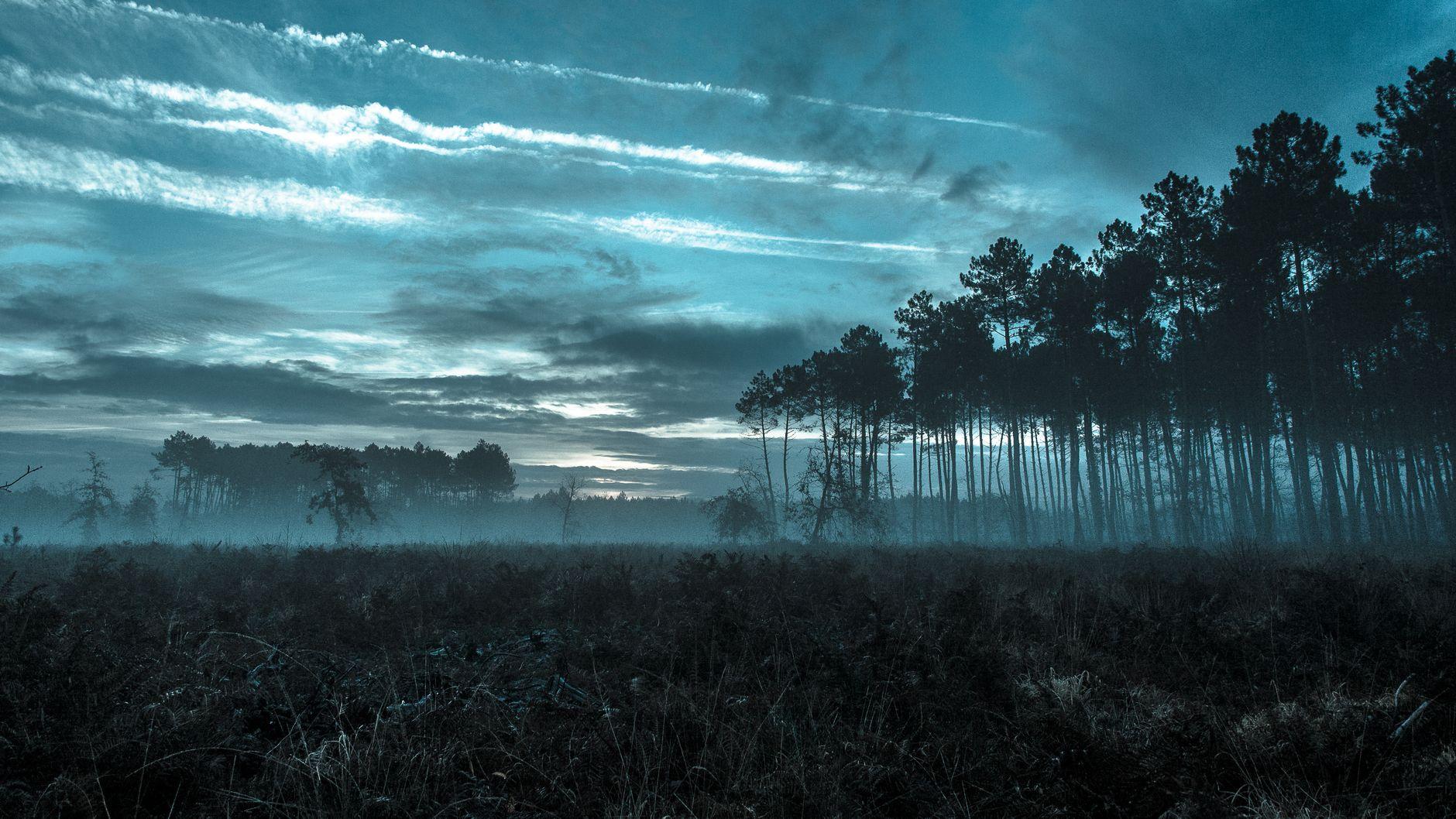
The Stank
I took the Authority’s buy-out in the spring and spent the summer looking at ground. Three acres at the edge of Tarluck, a chalk village with one street, a butcher’s that opens half days, and a river you could read a watch through. On the old maps my plot is called the Stank — orchard ground once, then grazing, then nothing much. The sale particulars had been honest the way only auction sheets are:
LOT 2. The Stank, 3a. 1r. 14p., riverside. Seasonal water, as anciently accustomed.
Thirty-one years I gauged the Tarle from the weir upstream — flood warning, abstraction licence, the morning staff — and I know this river’s numbers the way you know a dog’s habits. At autumn low it carries almost nothing. Nothing in it that could stand an inch of water over three acres.
In November I marked out the rows for the orchard, eighty mixed rootstock, cider and eating. At seven the next morning the wheel ruts had filled. An inch of clear water lying flat on the grass, no wind on it, cold enough to ache through the wellingtons.
No rain. The river at its lowest.
Gone by noon.
No Daylight Water
Col Hearn holds the grazing licence on the Great Bed, the long meadow between my strip and the river. He was setting out electric fence when I caught him at it. Chalk meadow drowned of a winter throws grass a month before unwatered ground, and in February Hearn’s cattle go onto the Bed while every other yard in the valley is still hauling hay. Who floods it? “The Bed’s flooded of a night. Always has been.” Put the question again and you get fence wire, measured off between two posts. “You’ll be wanting sheep-netting for that strip, not a lawyer.”
Mrs. Priddle is the last drowner’s widow. The drowner was the officer who opened the hatches at dusk and dropped the day door at first light, and his wage came out of the Bedwork Charity. Her husband has been dead nine years and the charity’s quarterly payment still arrives, addressed the same. She poured the tea with both hands around the pot. “The hatches keep their own time, dear. He never worried them, and I don’t.”
Roke is the agent for the Greaves estate, which sold me the Stank. In his office, with the deed bundle open between us: “The flooding carries the weight of custom. You’ll not want to be the one to weigh it.” And there it was on the fourth page, in the conveyance of 1911:
… and the purchaser shall not molest or interrupt the drowning of the Great Bed at any season, the said water being of ancient right and accustomed course, running to the alder carr at the nether end of the said meadow…
The solicitor who checked my purchase called that clause boilerplate. Roke called it custom. Nobody in Tarluck called it anything at all.
I did what thirty-one years at a weir teaches. A staff gauge set in the carrier — the old feed channel that crosses my strip — a logger hung on a fence post, and patience. First night, the water came on at 17:08. Second night, 16:52, two minutes before dusk, and so on, tracking the light down through November. Off again by 06:55. Off before first light, every night, to the minute.
The hatch at the head of my carrier was seized shut. Padlocked, the chain rusted into itself, the rack furred with nine years at least of not turning. The carrier still ran full every night, over the top of a closed gate, water that had not come down the river. The upstream gauge never moved.
Water on at dusk. Water off before light. No daylight water, ever, and no hand to turn anything.
The Seized Hatch
I freed it. Two evenings with penetrating oil and a stillson, chipping the rust out of the rack until the spindle turned, then leaving the hatch shut, exactly as I had found it. A man maintains his own ground. That is the whole of a gauger’s politics.
That night the water stayed past dawn. It stood at nine in the morning. At noon. By evening my marked rows were under two inches, and the following night it stood longer.
So I put the number in front of somebody official. A district enquiry — riparian flooding, unidentified operator, request for the abstraction record — filed from the library terminal in Winton. Inside a week the lane by the bridge ran an inch deep at midday. Hearn’s cattle stood off the Bed’s edge with their noses down and would not touch the water. Mrs. Priddle’s garden path had begun to weep, and when I called she had the kettle on and said nothing at all.
I sat out the dusk on the bank above the carrier, upstream of the hatch, with a flask and no torch. Ten past five, and the light went out of the alder carr. The water came up the channel without a sound in it — flat, chalk-clear, rising against the shut gate as if the level were a thing the ground remembered rather than was fed. To the top of the carrier, and no farther. It held there, giving off cold.
Petch, the parish chair, came down the bank and sat beside me with a torch he never switched on. A long while, and the water did the talking.
“Nobody opens those hatches,” I said.
“They’re shut,” he said. “And the Bed’s flooded of a night. Always has been.”
Then the one straight thing anyone said to me in Tarluck. A district enquiry brings the commons review with it, and a commons review measures boundaries — there is ground off that green that has sat quiet since George the Third, and I did not ask whose. He stood, and put his hand flat on the bank grass, the way you steady a horse.
“Withdraw your form,” he said. “Then see what your ground does by morning.”
I withdrew it the next day, ticking the box that says resolved to the complainant’s satisfaction. It was not, yet.
That night the water went on at dusk and left my strip by first light. The next night, the same. The logger I have left running puts the water table on the Stank at eight hundred millimetres down. All November it stood at two hundred.
Early Bite
In February the strip threw grass a full month ahead of any ground around it — the early bite, the same feed Hearn’s cattle get off the Bed, standing up my marked rows like a green rule. I planted the orchard in March. Eighty trees, spaced, staked, and firmed in ground you could walk on in boots.
In April a car stopped at the bridge. A couple from town with a folder of particulars, asking after the plot past the bridge, the one in the agent’s window marked seasonal water. “Who actually floods it?” the woman asked. “Is there a charge?”
I gave them Roke’s answer, word for word, the way it was given to me.
You’ll not want to be the one to weigh it.
Then I went up the lane and planted the last of the trees.
Read to the end. Some stories shouldn't be left unfinished.