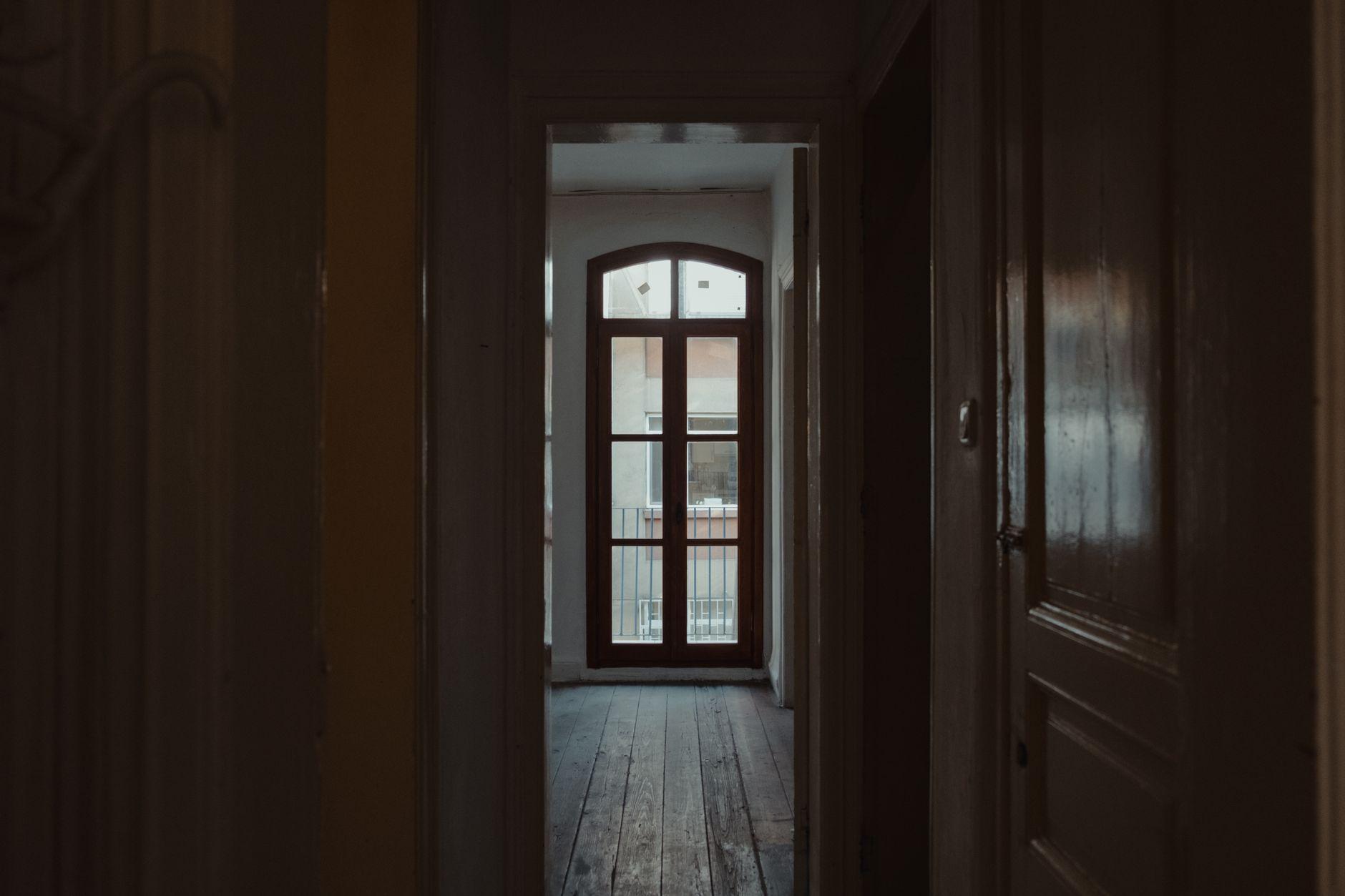
The repiling crew finished on a Tuesday and left the house level for the first time in fifteen years. Dad signed the completion docket at the kitchen table, and I watched the pen make its loops without sliding anywhere, and that was when I understood we had been living on a hillside all this time — indoors, in suburbia, two kilometres from the nearest slope.
The bungalow had come off the September quake with its piles shifted, the Heathcote side of the floor running maybe forty millimetres low. The claim went in. Then the claim went sideways for a decade and a half — assessments, apportionments, a whole civic weather system the house sat under without complaining — and in the meantime we calibrated. You do it without deciding to. Tea got poured on a slant and landed true. Grandma’s hip learned to expect the little catch at the laundry door. I could walk that hallway in the dark, in socks, at speed, because my ankles had the floor memorised.
Level floors are a personal insult to anyone whose ankles have a floor memorised.
For the first week we lurched. Mum caught doorframes and apologised to them. Dad’s chair, tipped back as always, shot the length of the kitchen and hit the fridge like it had been fired. I put a cup of tea down on the bench with the old counter-tilt still in my wrist and watched it go over the edge and pool in the cutlery drawer; by Wednesday there was a towel kept folded on the bench for me. Grandma stood at her window spot and swayed, gently, for a solid minute — grass, deciding about wind.
Guests stopped spilling, though. That was the dividend. Aunt Kaye came for Sunday roast, set her wine glass down without bracing, and looked mildly insulted that nothing slid.
The Give
I found my stair again at the end of January.
We all have one. Mine is the third from the top, where the old floor used to flex under the ball of my foot at speed — a give with a particular depth to it, half-spring, half-purr. I had missed it for a week the way you miss a handshake. Then, on the Thursday, coming up two at a time with a stack of law readings, my foot landed in it. The give. The exact give.
I stopped, and put my other foot down on the same stair, and it was still there, and the wood was nine weeks old.
You can check a stair. I fetched Dad’s spirit level from the garage, and the bubble said the flight was true, and the bubble was a liar, because my foot knew. Except the bubble was not a liar either: the stair read level along its length. The dip was in the joist beneath my stance, a private settle of a few millimetres that existed only where I stood, and only that deep.
Mum found hers the same week, at the bench where she rolls pastry — an eastward give now, where her weight rocks when she is working butter into flour. Grandma’s spot by the window had come back too: the boards leaned from the window toward the range, the old downhill direction, and sized — this is the part I could not put down — sized to a body that leans while standing still.
So I did what you do with a floor you do not trust. I tested it.
For one week I stood, every evening, ten minutes or so, in the far corner of the lounge by the bookshelf — a place with no traffic and no reason. I took my tea there. I read Evidence in the corner. I put my weight on the left heel, the way I do.
By Sunday the boards under that corner had begun to give. Not much. A breath, a millimetre or two — enough that standing there, in a house that measured level everywhere else, my tilted body stood level.
Then I spent a fortnight away at Priya’s in Dunedin, and came home and went to the corner in my socks like checking a set jelly. It had held. Same depth, waiting.
The house was not remembering us. It was learning.
The Surveyor’s Plan
The follow-up visit was routine — workmanship warranty, the assessor’s office sent a surveyor with a floor plan and a rotating laser. A big quiet man named Barrett, who knelt in every room for an hour and a half and then sat at the table filling in little numbers. His report came back in March. Dad read it at the bench and passed it to me without a word.
SETTLEMENT OBSERVED, DWELLING 14 RAUPO PLACE. LOCALISED DEPRESSIONS, FLOOR FINISH AND SUBSTRATE, MAX 6 MM. LOCATIONS: KITCHEN WINDOW BAY; STAIR 3; LOUNGE W-SW CORNER; MAIN BATHROOM DOORWAY. NO PATTERN CONSISTENT WITH SUBSOIL MOVEMENT, PILE DEFECT, OR MOISTURE. RE-LEVELLING AVAILABLE UNDER WORKMANSHIP COVERAGE AT NO COST. RECOMMEND MONITORING.
Four depressions. Barrett had pencilled each one on the plan with its depth and its date, and his map of the house was, if you knew us, a portrait: the window bay where Grandma stands for an hour every morning watching the street while her cup goes cold; the third stair, mine; the corner where a girl who is leaving plants her heel on purpose; the bathroom doorway where Dad leans while Mum does his collar, because he will not sit for it.
He had drawn us. There was no way to tell him that.
No cause. That was the finding, in the end: six millimetres of settle that tracked us like weather, in a house nine months off its new piles, on ground the geotech had signed off as sound. And one other thing. Grandma’s hip had been better since February. She had stopped asking for her stick at the shops. At her window bay, standing in the little lean the floor had made for her, her bad side unweighted itself, exactly where the old downhill used to carry it.
The re-levelling was free. All Dad had to do was sign, and the crew would come and put the house back to nothing.
He left Barrett’s letter on the bench for three days. Mum wanted it done; her shopping list that week ended in check piles. I laid the surveyor’s plan on the table one night after tea, pencil marks turned to the light, and said nothing, because in our family you are allowed one silence like that per year.
Dad looked at the window bay on the plan for a while. Grandma was in it at the time, cup going cold, watching the street.
“Six millimetres,” he said. “Letter says the ground’s sound.”
“It does,” Mum said.
“Her hip’s better.”
Nobody argued. That was the whole meeting. Dad wrote back declining the work — happy as found, which is apparently a thing you can put in a letter to an insurer and have it understood.
Christmas, in Socks
I moved out in the last week of February, into a flat in Riccarton with floors like a billiard table and a flatmate who apologises to nothing. My body kept the lean for the first month: I poured tea true on a level counter, which is to say I poured it slightly over the cup, or into the cup, depending on which floor my feet believed in that week. Then it faded. Mostly. The left heel still lands first.
I was home at Christmas. In socks, at the top of the stairs, I stepped into my give — still there, same depth, it had waited nine months for my foot — and for the first time since the repile the horizon of the walls, the window light, the level of my own head all came out flat. I stood on a stair that is true, and a stair that is mine.
Aunt Kaye came for the roast, set her glass down without bracing, and Dad’s brother knocked his over reaching for the gravy, and Kaye said, “Lord, is it the house again?” and Mum said, “No, just you,” and everyone laughed, and nobody mentioned the plan in the sideboard, or the pencil marks, or the way the tea at the window bay sits level now — level in a tilted cup, in Grandma’s hands, over a floor that dipped for her on purpose, or for no purpose at all, which is the same thing here.
The house keeps our lean for us. That is the whole of what I know about it.
Read to the end. Some stories shouldn't be left unfinished.