The Blue Door
Two versions of the Callowfield rule reached me before I ever set foot in the place.
The first came off my cousin’s boyfriend, Aaron, who did three weeks on nights there between jobs and left with an overdraft and a theory. A glove a week, he said. Not your glove, not anyone’s in particular. A glove. You signed out at six, somebody’s glove was gone, and that was the whole of it.
The second came at five-a-side, off a bloke who carted parcels up the M6 for a living. His ran bigger. A whole cage — roll cage, forty-odd parcels, shrink-wrapped — came off the floor at Callowfield one night and never surfaced again. Not mislaid. Not stacked behind a pillar by somebody with a temper. Gone, and the sort had moved around the gap like water around a stone.
Both versions agreed on one point, which is more than most rumors manage. Whatever you carried through the blue door, you didn’t get attached to it.
I signed on with the agency for the peak anyway. My overdraft made the argument, and I let it. I told myself it was the money. It was partly the money.
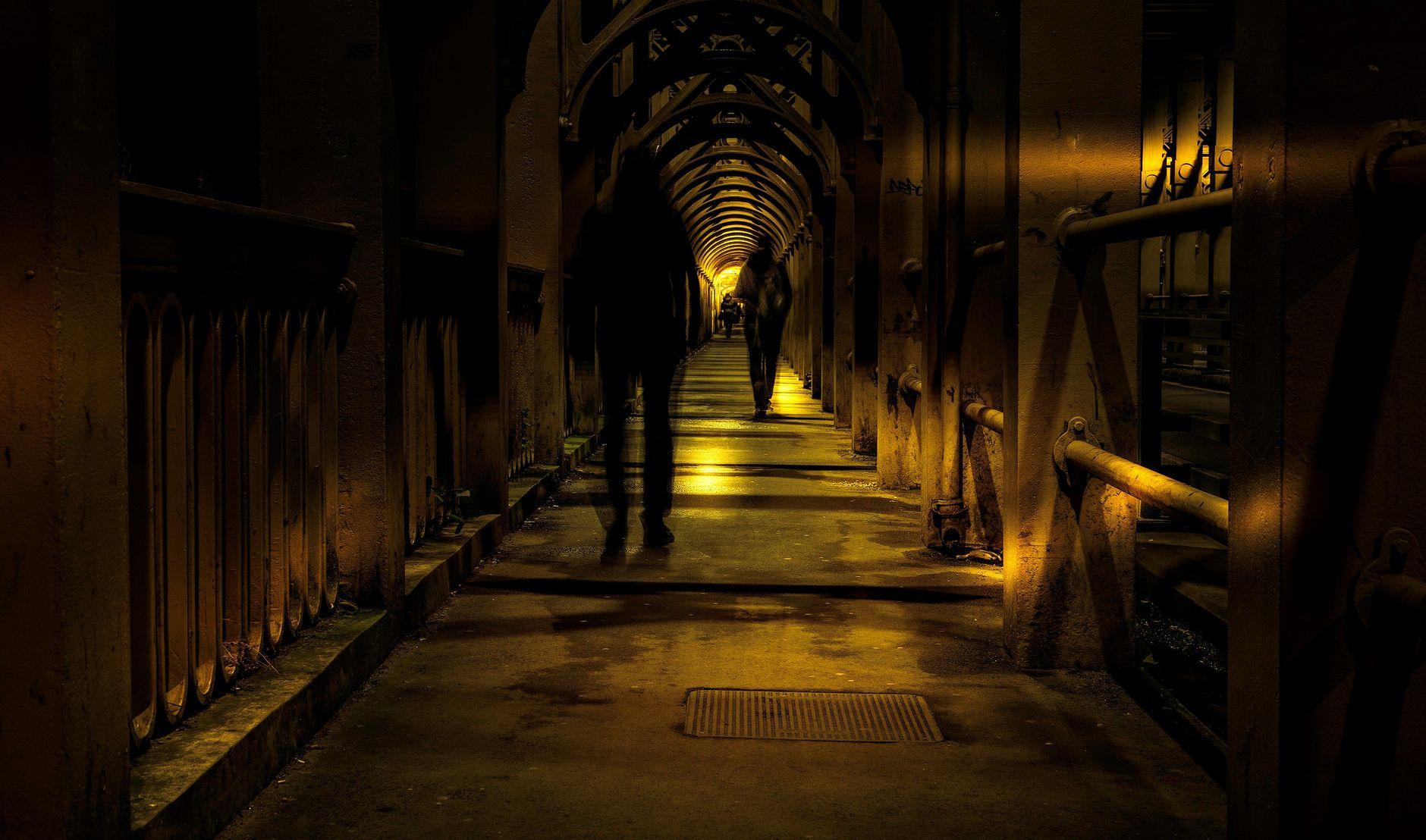
The depot sat off the ring road behind a haulage yard: gray portal-frame shed, roller shutters, a smell of diesel and parcel tape that got into your collar and stayed there. The blue door stood between the office block and the sort hall — a fire door painted a blue so flat it looked pasted on. You badged out of one side and into the other, and between the two there was nothing you’d call a threshold, unless you had heard the versions.
Breda ran bay one and had done for twenty-two years. She taught me cage lines and the short way around the belt guard, and at the end of my first week, in the smoking shelter with a gutter running between our boots, she gave me the rule itself.
Never carry anything through the blue door you’d mind losing.
If it goes, say nothing. Write nothing.
The book already knows.
“It’s not my rule,” she said. “It was old when Colin was seasonal.”
The book hung on a nail inside the office, which is to say past the blue door. Wire-bound, SHORTAGES across the spine in marker gone the color of clay. Inside the front cover, in pencil: 1,407. Below the count, dated lines in a run of different hands, going back past the cage in bay one and past the fittings in the canteen. I checked that out one slow night, out of the boredom that gets you in the end.
17 Dec — 1 castor, 75 mm, cage 9. No loss recorded.
18 Dec — 1 socket plate, twin, staff kitchen. No loss recorded.
The item was logged. The line was closed. The count took the difference.
The Pick
Breda’s word for it was the pick. What got picked tonight? One thing a night, never two. I never worked a night with nothing.
First week it kept to the far aisles. The fire notice by the blue door, laminated, KEEP DOOR CLOSED, went to KEEP CLOSED — a word gone from under the plastic, cut to the shape of its own letters, no scoring, no lifting, nothing to get a fingernail under. The socket plate by the kettle: plate gone, screws still in, conductors capped with a neat twist of tape, and the socket switched off at the wall first. That was the part I minded. A castor came off cage 9, and the cage stood tilted on three wheels with no jack marks anywhere on the frame.
Second week it moved to shared kit. The 3 decal went off the keypad, and the button under the blank spot opened the door the same as ever. You learned the blank the way you learn a pothole on your own street. The second hand came off the office clock, and the minute hand went on making its rounds with nothing sweeping under it.
Then it walked inward, and I stopped expecting it to stop.
My biro went from behind my ear between scans. I had it at the belt at three o’clock; at the break my ear was lighter, and there is no honest way to mislay a pen that is behind your ear. My left glove went off the cage shelf in the minute I spent on the belt. A button came off my jacket cuff between hang-up and knock-off. Then the tin of mints, 04:37 by the office clock, which had no second hand left to argue with.
The agency kept phones off the floor anyway, so the rule cost me nothing there. Phone in the car, notebook in the glovebox, one line a night. Thirty-one lines by the end.
No Loss Recorded
Colin, the supervisor, took his tea at four. At four he brought the book down off the nail, dated a fresh line, and wrote the close-out: no loss recorded. At four, with the last hour of the sort still to run.
My mints went at 04:37, thirty-seven minutes under a line that was already standing. I started checking it the way you check a timetable you don’t believe: line first, pick after, every night. It never lost the bet. Not once all season.
At first I read it as a forecast, which kept me awake on the ride home. It wasn’t one. It was bookkeeping. Nobody on nights ever recorded a loss — that is the rule — so no loss could ever stand in the book. It was honest the way a locked room is empty. The timing was the part I couldn’t file: an honest book wants the whole night in it, and Colin wrote his off a night that hadn’t finished yet, and the night obliged him. All season it obliged him.
Third week, Sonia’s wedding ring. She wore it through the door on her finger, the way you wear a thing you’ve stopped noticing you wear. By knock-off it was gone. She turned her gloves out twice, walked the gutter outside the shelter, walked the drain grille, said nothing to Colin, wrote nothing. The rule doesn’t have a conversation in it.
The book the next morning had nothing to log. Colin wrote the date and the close-out and nothing between — first line all season with no item in it — and I’d have called the night clean except the count had moved. One up, same as every other morning. Nobody had found the pick. Nobody had carried anything past the desk. The count knew anyway.
“It’s not a shortage book,” Breda said, when I asked her what the count was. “Shortage means something’s not where it should be. Everything past the blue door is exactly where it should be.“
After that I stopped watching the book and watched the count. It agreed with my glovebox every morning, one for one, the whole season through.
The Last Sort
The permanent contract went to a lad who could already shunt the yard. Fair. I’d wanted it and hadn’t earned it, and those are different things however you paint them.
On my last sort I did the thing the rule is built to stop. I waited for Colin’s tea, brought the book down myself, dated a fresh line, and wrote:
23 Dec — 1 biro, blue, chewed cap. Personal property, carried since 2 Nov. Loss.
First loss ever recorded in that book — I’d read enough of it by then to know. Not variance, not a pick. Loss. If the books were right, I had written the first lie into them. If I was right, the books would have to be made true. Either way I’d learn which side the site keeps: the things, or the words about the things.
At six I signed out through the office and took the book down on my way past — you’d have done the same. My line was a stub. Torn at the hinge, close and square, with no rag left to it. The count read 1,438.
The pen never came back. Nothing ever comes back; put that in your version, because most versions leave it out. The page didn’t come back either, and the count held at 1,438 every morning to the end of the season, one for one with my glovebox. Thirty-one lines. The last said: the page.
I carted parcels for another three years out of other sheds, and none of them had a door worth mentioning. Then in 2019, waiting on a late trunk at a depot off the M62, a lad on nights gave me the story back. A place near Callowfield, he said. Blue fire door, book on a nail. By then it had grown itself a keeper: a stores clerk who’d hanged himself in the racks in 1987 and never stopped counting. And the rule, come down word-perfect through ten years of mouths: never carry what you’d mind losing, never write in the book, it keeps the pen and eats the page.
I said I’d not heard that one.
The rule had come through the telling better than anything true manages. The clerk was costume — that count was old before the shed it counts. The rest is mine to keep: a notebook in a desk drawer, thirty-one lines, the last one the page, and under it a number that sits somewhere off the ring road tonight, going up, one for everything that crosses.
I let the wrong version travel.
Read to the end. Some stories shouldn't be left unfinished.