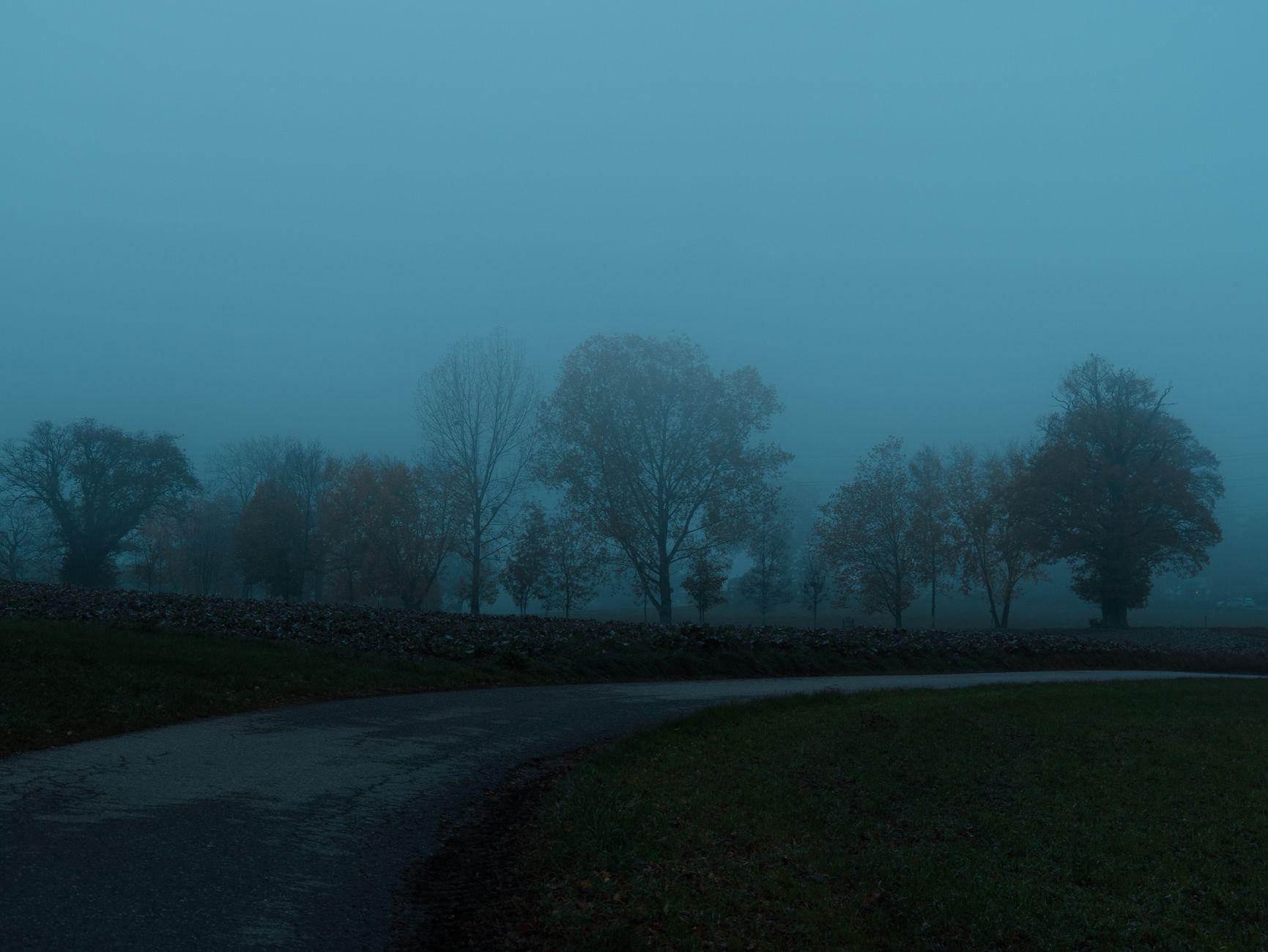
The Sill
The closing round takes eleven minutes in dry weather and nearer twenty when the carriers come down cased in ice, and you do it in this order or not at all. Creep the drive down to fourteen turns a minute. Walk each carrier across the sill — door open, interior cleared, anything found goes in the book — tally it, let the rack take it, and stop the line only when the last carrier’s in. Nothing stays out on a span overnight. That’s the job.
The trust’s version of all this is a laminated sheet with six bullet points and a space for initials. Idris’s version is four sentences, and it’s the one I work to.
Walk them all. Tally what you walk. The line stops on a full rack.
Nothing left out, whatever it costs you.
I took the round over from him in November. Three nights a week, valley station, on my own. The pay is nothing and the quiet is why I stayed: the drive ticking over, the carriers coming out of the dark past the window one a minute, snow crossing the headtorch beam. Twenty-two carriers, fleet numbers one to twenty-two, stencilled on the hanger plates since the renumbering in 1974.
The first night 9 came round, I walked her with the rest.
Wet floor. Not ice — water, standing in the low corner where the seat meets the wall, and it had been raining nowhere. It had been snowing for two days up top and the forecast held nothing else. The plate on the hanger read 9, and there is no 9. I checked the fleet list in the drawer twice, because the drawer also holds the 1974 accident report and I knew already what I’d find in it.
The Cwmglas Ropeway lost two carriers in February 1974. A splice let go on the Pen-y-Bwlch span in a night storm, and 9 and 10 came down into the nant. Four aboard between them. Two were brought up. Two were not, and the nant keeps what it keeps. The trust renumbered the surviving fleet and retired the old numbers.
I rang Idris from the station phone. He asked one question — had I stopped the line — and when I said no, he gave me the rest like a man reading out a shopping list.
She comes round at close. Walk her. Log what’s in her. She racks herself.
Never stop the line with her out. That’s what stopped it last time.
The “she”, I worked out later, was doing a lot of work in that sentence. I didn’t ask. He’d kept the round thirty-one years, and his book is still in the drawer. His winter columns all read “23 walked, 22 racked”, in a small clerk’s hand, without comment, and the archived fleet lists say twenty-two. Thirty-one years of twenty-three.
The White Mark
9 comes late, always, last or last-but-one, and she comes up the line wet. The water in her isn’t sky-water. The nant runs under the Pen-y-Bwlch span, under the place she fell.
In the second week of December she carried an anorak, folded square on the seat, saturated. Lost property, dark green, zip intact, no mark: that’s my hand in the book. The third week, a boot by itself, adult, right foot, laces still done. On the shortest night a wedding ring sat in the coin tray with the tray dry and the ring warm, and my hand smelt of iron for an hour afterwards.
The counterweight tells you what the book can’t. The tension pit is under the station floor, and the white mark on the counterweight rope sits level with the sill when the line is stopped and balanced. Through December it sat lower at each close — a finger’s width, then two, then a hand. The creep current told it another way, the ammeter holding a quarter-amp over an empty carrier’s draw, then half, and by the first week of January three-quarters. A carrier weighs 380 kilos. The passenger allowance is 200. I did that arithmetic at the pit rail with the torch in my teeth, and then I stopped doing arithmetic at the pit rail.
On the sixth of January her door came past the sill latched from the inside. I stood with my hand on the release for the length of one full carrier, then let the line carry her on, logged “door secured, contents nil”, and was sick behind the oil store, and came back and finished. Twenty-three walked. Twenty-two racked. The mark two hands low.
The 22:40
Tuesday is the night the bus matters. Elin finishes at the surgery at ten and waits at the crossroads, and I’d made it once since November, on a slack Thursday.
The fourth Tuesday of January, everything ran long — a frozen hanger bolt on 14 wanting grease, the creep governor wanting a hand on it — and 9 came round last with the mark three hands down and the ammeter riding high, and it was 22:31.
Walking her, logging her, holding the creep while she went round the bullwheel and racked herself: twelve minutes. I stood at the desk with the pen up and did that sum. Then I did the other one, where I write “22 walked and racked”, stop the line, lock the gates, and run the half-mile to the crossroads, and the 22:40 carries me down the valley to where the streetlights start.
I wrote it. I stopped the line with the rack showing twenty-two and the dark past the bullwheel showing one more, out where the creep had left her. I caught the bus. Elin had her hands round a flask and we rode with our knees touching, and the hill went away behind us black under a hard sky, and I slept.
The 08:10 is the first car up — two visitors and a school party of nine. It stalled on the Pen-y-Bwlch span.
Not a fault. The drive tripped on overload with the car forty metres off the tower, the recovery ran two hours, the visitors came down the span in rescue slings, and the school party stood in the loading bay in foil blankets. A man of seventy went to the district hospital with his heart doing the wrong thing. The engineers stripped the drive, the brake, the tension gear, and found wind loading. All week, that’s what they found.
I opened the winter book at the pit rail.
The 1974 report is three pages. The line stopped that night at 22:36 — the old keeper’s round cut short by a phone call, 9 still out on the span, loaded, four aboard, the storm at its worst. The splice went at 23:50. Nobody wrote why the round was cut. The keeper’s last column that night reads “22 walked”, ink even and untroubled, and Idris’s thirty-one years of “23 walked, 22 racked” start on the next page, and you can read the whole thing as one man paying a debt in the only coin the line takes.
A carrier’s load is only carried while it’s counted. The walk past the sill is what the line takes for proof of what it holds. The coat, the boot, the ring — not lost property. Freight, arriving, one lot a week, all of it bound for the anniversary. And the load the count doesn’t cover carries over into the morning, onto the first live car, with the school party on it.
I faked a tally to catch a bus, and the line did what I’d signed for.
The Twelfth of February
I kept the round after that, every night the trust would give me, and the mark held at two hands and did not deepen.
On the anniversary she came round heavy. The creep read a full amp over empty. The door was shut and the floor was dry for the first time since November, and the air in there when I opened it was February air, air that had been somewhere.
The report gives the four names. I won’t; they’re on the inquest page and in the church porch, and that’s where they belong. But the book has a column for contents, and I wrote them there, all four, in the order the report has them boarding. Under “walked” I put 23. Under “racked” I left the space blank, because I didn’t know yet.
Then I held the creep at fourteen turns and stood at the window while she went out of the light.
The drive didn’t change pitch. The ammeter fell back to empty-carrier draw over about thirty seconds, the way water leaves a sink, without a step in it.
From the loading bay, the rack taking a carrier is one clunk, hanger against stop-bar. Twenty-two a night, every night, and you stop counting them. The twenty-third came in at 22:58. The pit torch showed the white mark sitting level with the sill. I stopped the line on a full rack.
By morning the rack held twenty-three hulls. Her plate is still on the hanger, and she’s racked between 14 and 15 the way nothing is, and the trust has recounted her all spring — the manager, the insurers, a man from the historic structures register with a clipboard — because the inventory says twenty-two and the rack says otherwise, and every count comes out right for whoever walks it.
The round is mine now, four nights a week. Elin takes the 22:40 down without me. I ride the last car up before close, and I walk home over the shoulder in the dark, two hours, and I’m on the sill again at dawn to let the first car go.
Walk them all. Tally what you walk.
Read to the end. Some stories shouldn't be left unfinished.